
How to Create a Connector in Konnectify
Creating automated workflows between your business applications is straightforward with Konnectify. This comprehensive guide walks you through building a Konnector from start to finish, covering trigger setup, action configuration, and activation.
Time to complete: 10-15 minutes
Difficulty: Beginner
What You'll Need
Before you begin, ensure you have:
An active Konnectify account – Sign up at https://www.konnectify.co/sign-up if you haven't already
Access credentials for the apps you want to connect – API keys, OAuth tokens, or login credentials
Understanding of the workflow you want to automate – Know what event should trigger the automation and what action should follow
Understanding Konnectors
A Konnector in Konnectify is an automated workflow that links your applications together. Each Konnector consists of:
Trigger – The event that starts your automation (e.g., "New ticket created")
Optional Conditions – Filters, paths, code blocks, or repeaters to control data flow
Action – What happens when the trigger fires (e.g., "Create contact" or "Send email")
Field Mapping – How data flows from the trigger to the action
Step 1: Create a New Konnector
Access the Konnector Creation Interface
Log in to your Konnectify account
Click the New button in the top navigation
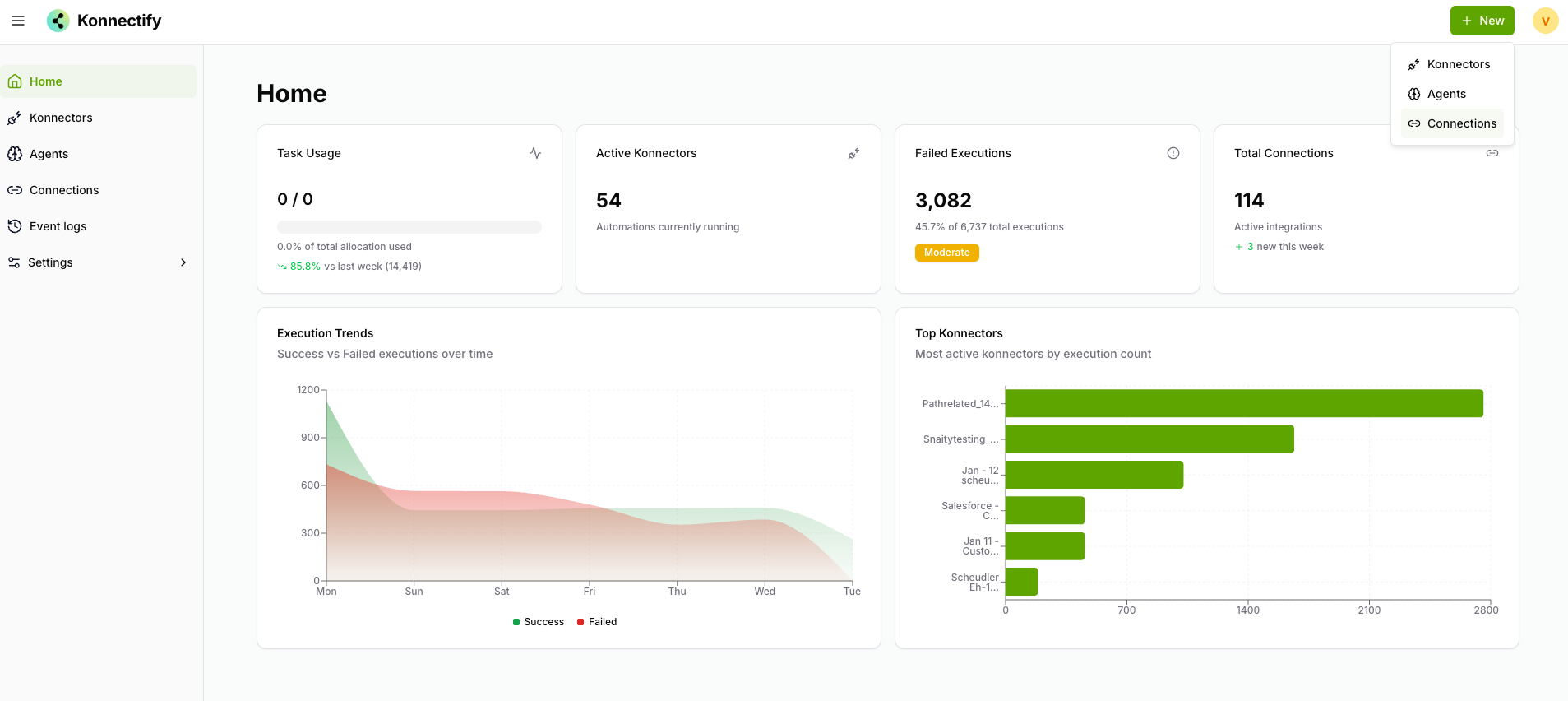
Select Konnector from the dropdown menu
The Konnector creation interface opens with the trigger selection screen
Step 2: Choose Your Trigger App
The trigger is the event that starts your workflow automation. When you're building your first Konnector, you'll see options to select an app for your trigger.
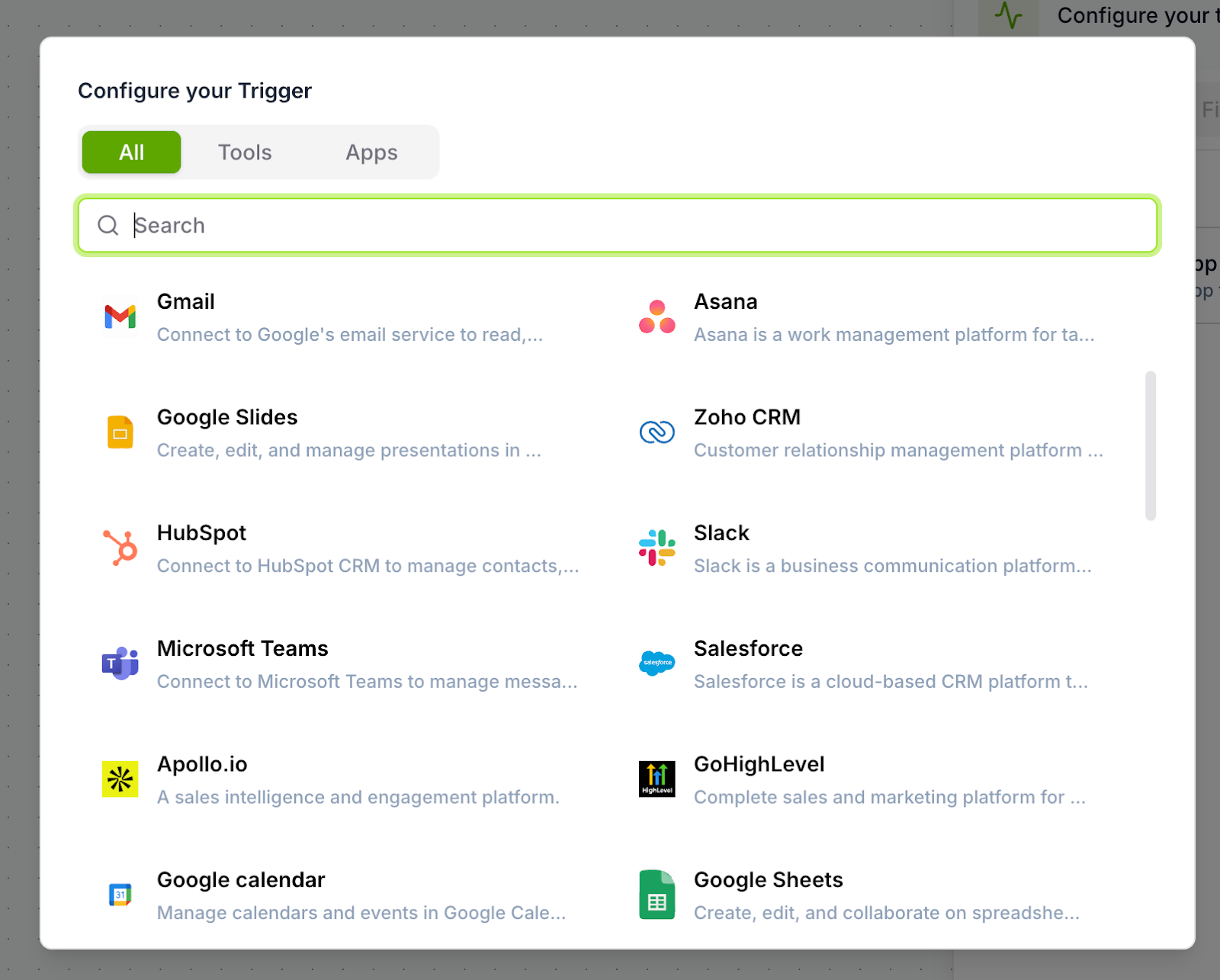
Select the Trigger Application
In the "Configure your Trigger" modal, you'll see available apps and tools
Browse or search for your trigger app:
Apps tab: Shows connected third-party applications
Tools tab: Shows built-in Konnectify tools (Catch Hooks, Scheduler, etc.)
All tab: Shows everything available
Click on the app you want to use as your trigger (e.g., Freshdesk)
Common trigger apps include: Freshdesk, Freshsales, Gmail, Slack, HubSpot, Salesforce, and many more.
Step 3: Select the Trigger Event
After selecting your trigger app, you need to specify which event will start your workflow.
Choose the Specific Event
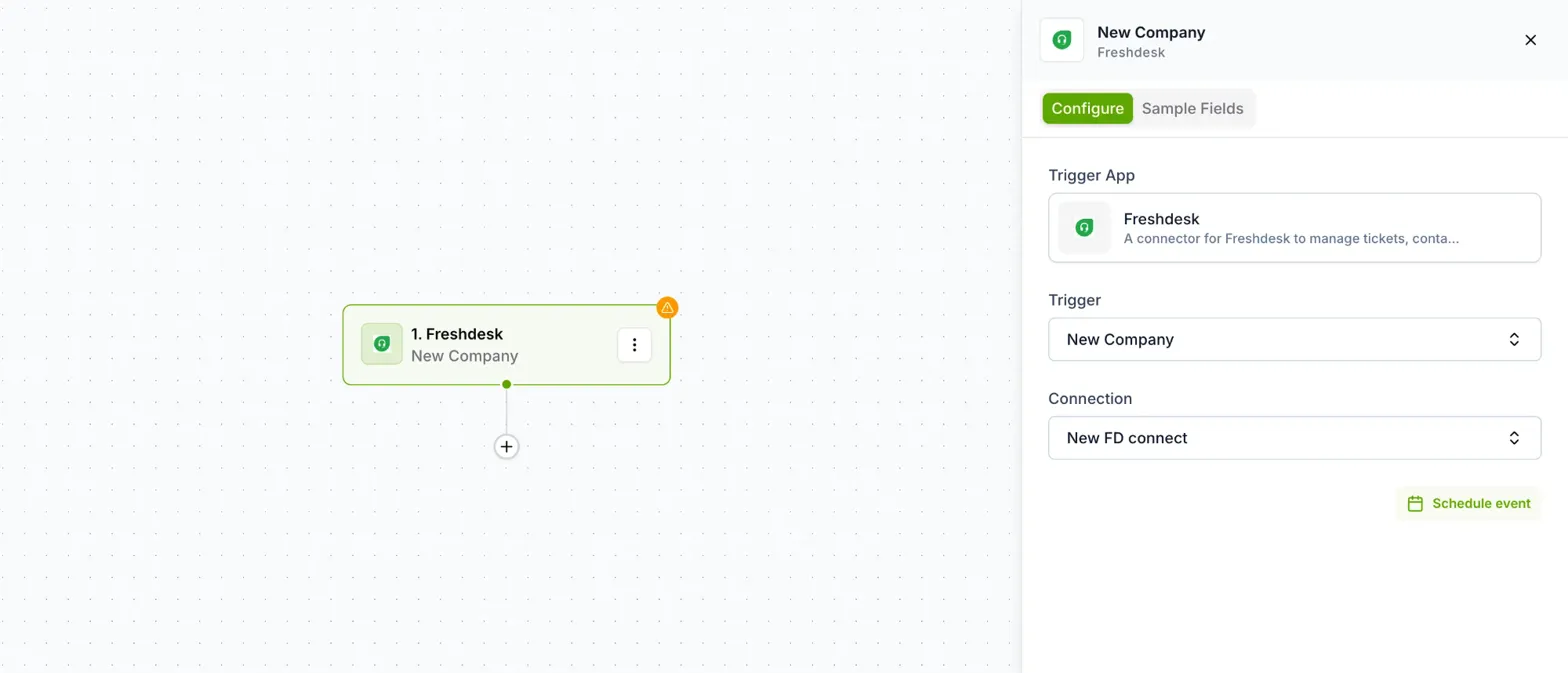
In the configuration panel on the right, locate the Trigger dropdown
Click to see available trigger events for your selected app
Choose the event that matches your automation needs: For example,
New Company – Fires when a new company is created
New Ticket – Fires when a new support ticket is created
New Email – Fires when a new email is added
Updated Company – Fires when company information changes
Updated Contact – Fires when contact details are modified
Each event includes a description explaining when it fires and what data it provides
Example: If your trigger app is Freshdesk, you might select "New Ticket" to trigger the workflow whenever a customer creates a support ticket.
Step 4: Create a Connection (Authentication)
To access data from your trigger app, you need to authenticate and create a connection.
Authenticate Your App
Under Connection in the configuration panel, click "Choose connection"
You'll see two options:
Existing connections – If you've already connected this app
+ Add new connection – To set up a new authentication
Click + Add new connection to create a new one
Complete the Authentication Process
The authentication process varies by app. You'll typically need to provide:
For API Key Authentication (e.g., Freshdesk):
A modal appears titled with your app name (e.g., "Freshdesk")
Fill in the required fields:
Connection Name – Give your connection a descriptive name (e.g., "My Freshdesk Connection")
Domain – Enter your company domain (e.g., "your-company-name")
API Key – Paste your Freshdesk API key
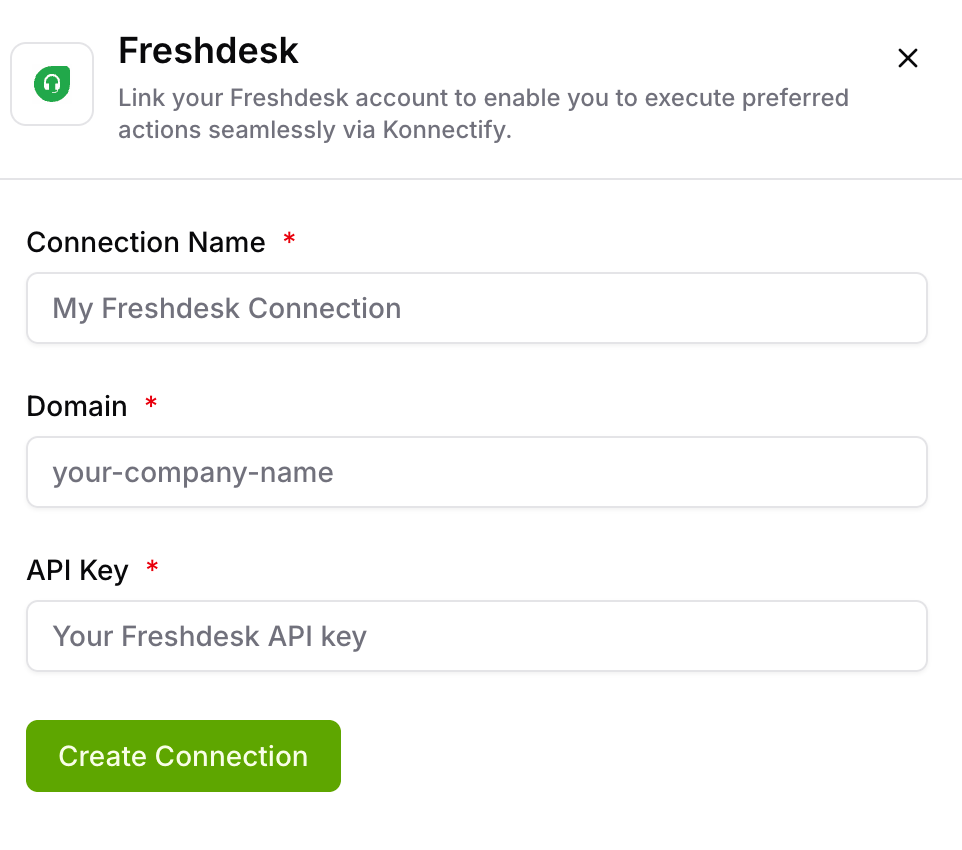
Click Create Connection
For OAuth Authentication:
Click the authentication button
You'll be redirected to the app's login page
Grant Konnectify permission to access your account
You'll be returned to Konnectify with the connection established
Security Note: Konnectify encrypts and securely stores all credentials. You can manage or revoke connections at any time from your account settings.
Step 5: View Sample Fields
After authentication, Konnectify automatically fetches sample data from your trigger app to help you understand what information will be available.
Review Available Data
Click the Sample Fields tab in the configuration panel
You'll see sample data in JSON format showing all available fields from your trigger
This preview includes:
Field names (e.g., "id", "name", "email", "created_at")
Data types (string, integer, null, array, object)
Example values from actual data
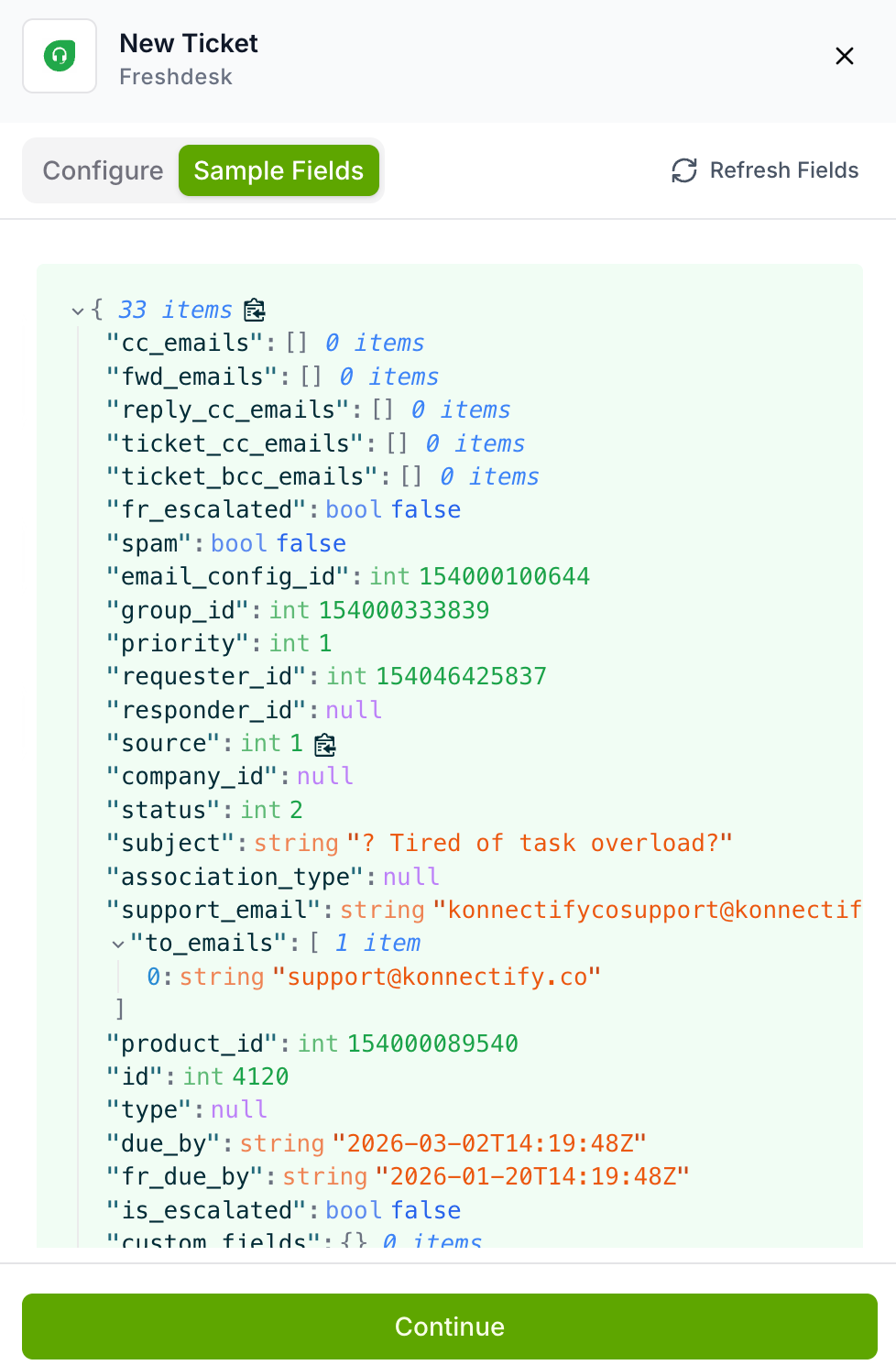
Why this matters: Understanding available fields helps you plan your field mapping in the action step. You can see exactly what data the trigger provides.
Click Refresh Fields if you need to reload the latest field structure
Click Continue when you're ready to proceed
Step 6: Add Conditions or Actions (Optional)
After configuring your trigger, you have a choice: add conditional logic or proceed directly to actions.
Option A: Add Conditional Logic (Optional)
If you need to control data flow or add custom processing, you can add:
Click the + button below your trigger node
You'll see options for:
Filter – Add conditions to filter which data proceeds
Path – Create branching logic with multiple paths
Code – Write custom JavaScript for data transformation
Repeater – Loop through arrays of data
Apps – Skip to adding an action directly
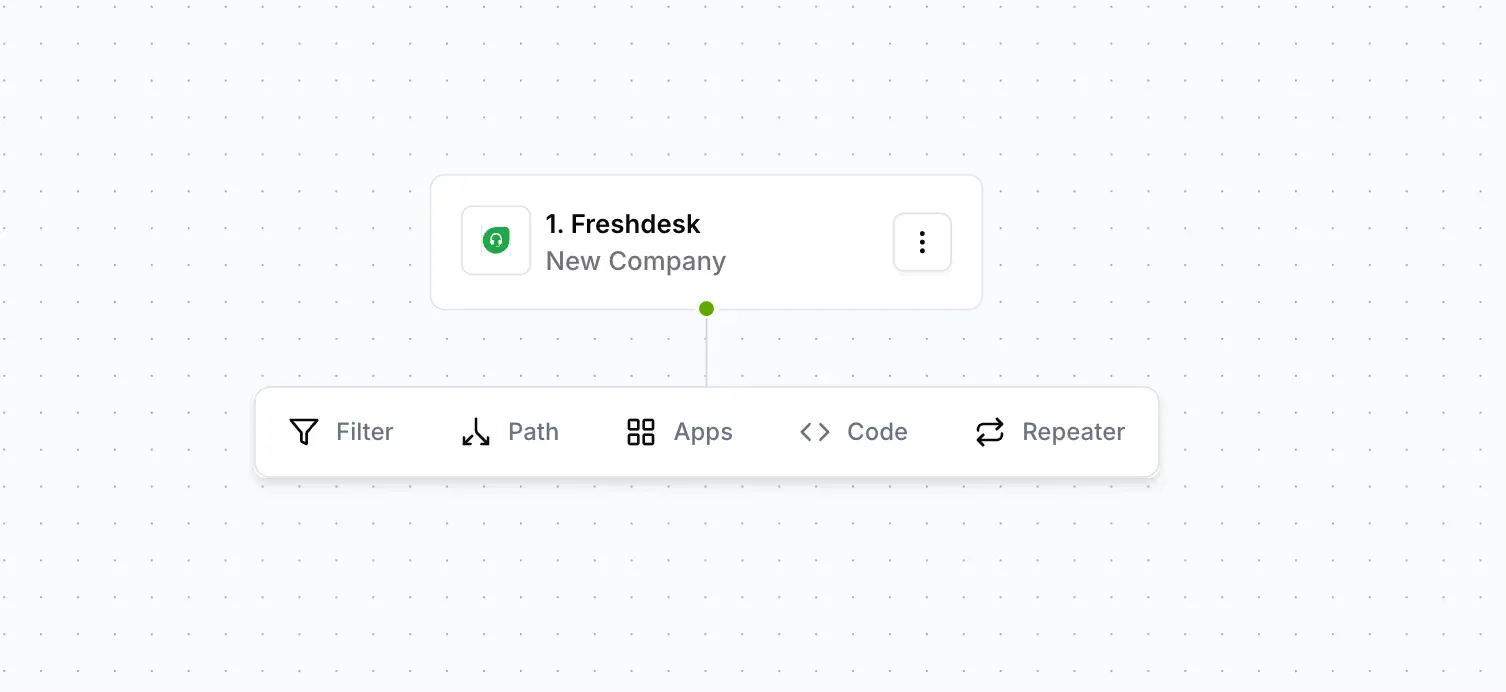
When to use conditions:
Filter: Only process high-priority tickets or leads above a certain value
Path: Route data to different destinations based on criteria
Code: Transform data formats or perform calculations
Repeater: Process multiple items from an array
Option B: Proceed Directly to Action
If you don't need conditional logic, you can add your action immediately:
Click the + button below your trigger node
Click Apps to select an action application
Proceed to Step 7
Step 7: Configure Your Action
Actions define what happens when your trigger event occurs. This is the "do this" part of your automation.
Select the Action Application
If you haven't already, click the + button and select Apps
Search for or browse to find the action app (e.g., Freshsales)
Click on the app to select it
Choose the Action Event
In the configuration panel, under Event, click the dropdown
Select the action you want to perform:
Create Contact – Add a new contact
Create Company – Add a new company/account
Update Record – Modify existing data
Send Email – Send an email notification
Create Ticket – Generate a support ticket
Each action shows a description of what it does
Example: If your action app is Freshsales, you might select "Create Contact" to add new contacts whenever a Freshdesk ticket is created.
Authenticate the Action App Connection
Under Connection, click "Choose connection"
Select an existing connection or create a new one
Follow the same authentication process as Step 4
If connecting the same app (e.g., both trigger and action use Freshdesk), you can reuse the same connection
Step 8: Set Up Field Mapping
Field mapping determines how data from your trigger flows into your action. This is where you connect the dots between the two applications.
Access Field Mapping
Click the Field Mapping tab in the configuration panel
You'll see all fields from your action app
Required fields are marked with * (red asterisk)
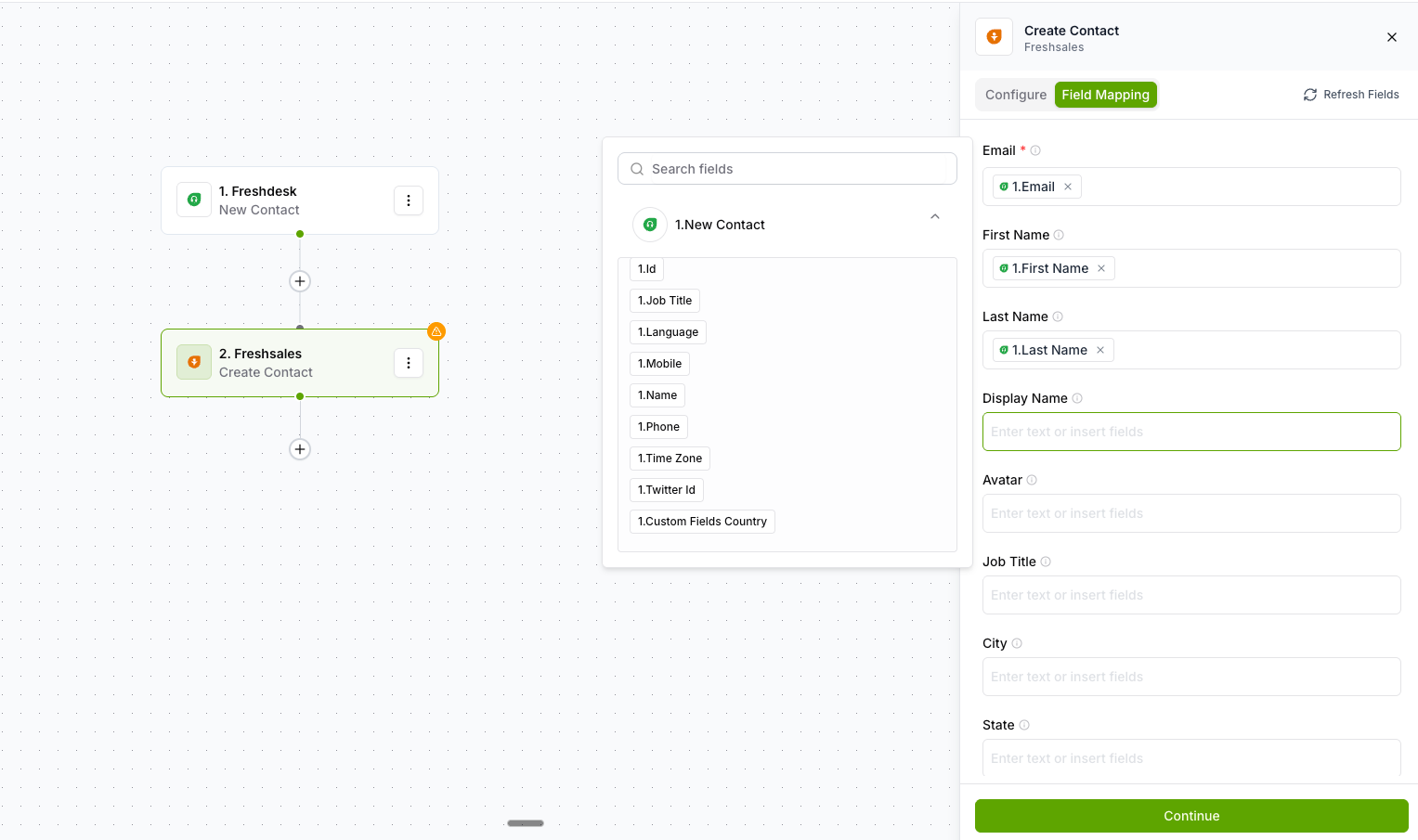
Map Your Fields
For each field you want to populate:
Click on the input field
Choose one of these options:
Insert fields from trigger data – Select dynamic data from your trigger
Enter text manually – Type static values
Combine both – Mix static text with dynamic fields
Field Mapping Example
Scenario: Creating a Freshsales contact from Freshdesk ticket data
Field mappings might look like:
Email → {{1.Email config ID}} (from Freshdesk trigger)
First Name → Map to requester first name from ticket
Last Name → Map to requester last name from ticket
Display Name → Combine first and last name
Company → Map to company name from ticket
Tips for effective mapping:
Always map required fields (marked with *)
Use the Refresh Fields button if you've added custom fields
Test your mappings to ensure data flows correctly
Combine fields when needed (e.g., "{{First Name}} {{Last Name}}")
Step 9: Save Your Konnector
After configuring your trigger, optional conditions, action, and field mapping, it's time to save your konnector.
Name Your Konnector
Click the Save button in the top-right corner
A modal appears asking for a Konnector Name
Enter a descriptive name that explains what the konnector does:
✅ Good: "Freshdesk Tickets to Freshsales Contacts"
✅ Good: "New Support Tickets → Create CRM Contacts"
❌ Avoid: "konnector 1" or "Test"
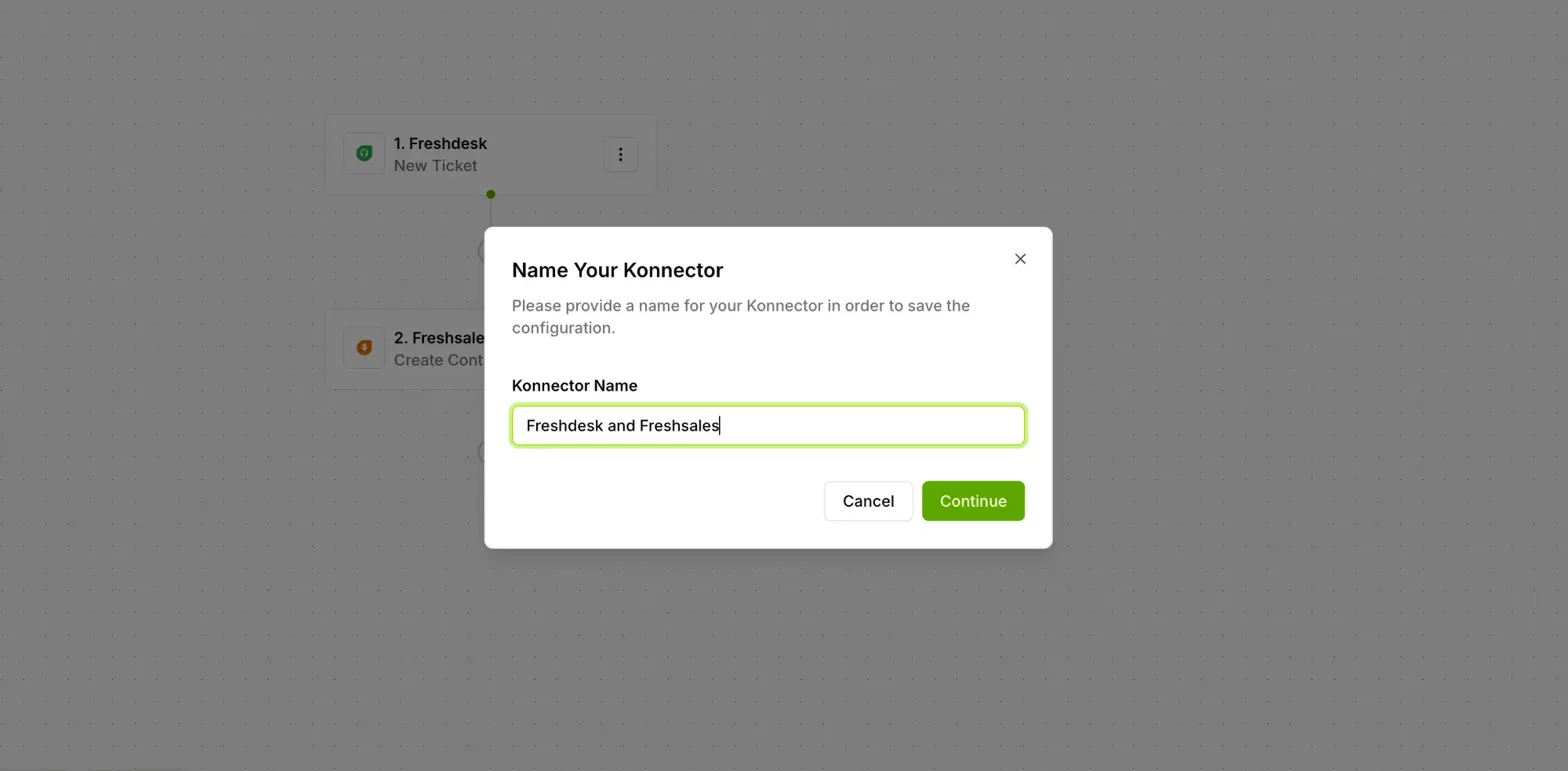
Click Continue
Important: You cannot save your konnector without providing a name. Choose a clear, descriptive name that will help you identify the konnector later.
Step 10: Activate Your Konnector
After saving, your konnector is created but remains in Inactive status. It won't run until you activate it.
Activate from the Konnector Page
You'll be taken to the konnector details page showing your workflow
Your konnector displays:
Node 1: Your trigger app and event
Node 2: Your action app and event
Connection lines showing data flow
In the top-right corner, you'll see the Active/Inactive toggle
Click the toggle to switch from Inactive to Active
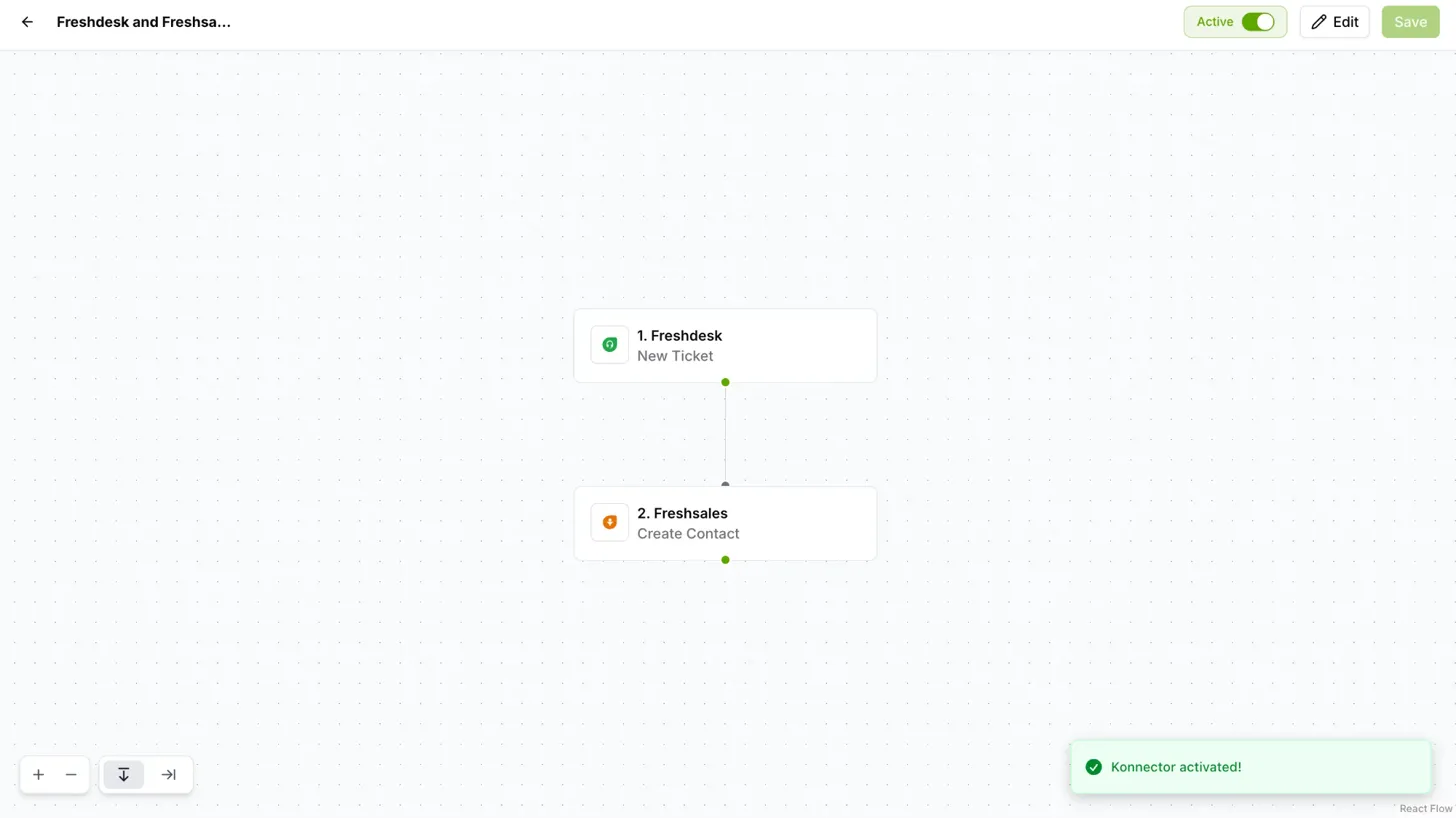
A confirmation message appears: "Konnector activated!"
Alternative: Activate from Konnectors List
Navigate to the Konnectors page from the left sidebar
Find your newly created konnector in the list
Toggle the status switch from Inactive to Active
What Happens After Activation?
Once your konnector is active:
✓ Automatic monitoring begins for your trigger event
✓ Real-time execution occurs when the trigger fires
✓ Actions run automatically according to your configuration
✓ All activity is logged in the execution history
✓ Error notifications alert you if issues occur (configurable)
Monitoring Your Konnector
View Execution History:
Go to the Konnectors page
Click on your konnector name
Review the execution log showing:
When the konnector ran
Whether it succeeded or failed
What data was processed
Any error messages
Check Status:
Green indicator: konnector is active and healthy
Red indicator: konnector encountered errors
Gray indicator: konnector is inactive
Next Steps
Now that you've created your first konnector, explore these advanced features:
How to Use Paths – Create branching logic with multiple outcomes
How to Use Filters – Add conditional filtering to your workflows
How to Use Code Block – Write custom JavaScript for advanced transformations
How to Use Repeater – Process arrays and bulk data efficiently
How to Use Scheduler – Run konnectors on a time-based schedule
Was this article helpful?
That’s Great!
Thank you for your feedback
Sorry! We couldn't be helpful
Thank you for your feedback
Feedback sent
We appreciate your effort and will try to fix the article